As a seasoned provider in the centrifuge industry, I’ve had countless conversations about the technical aspects of our equipment. One of the most frequently asked questions is about the Relative Centrifugal Force (RCF) of a centrifuge. In this blog post, I’ll delve into what RCF is, why it’s crucial in centrifugation processes, how it’s calculated, and its implications for different applications. Centrifuge
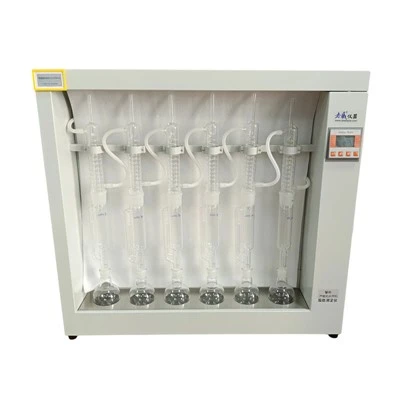
Understanding Relative Centrifugal Force
Centrifugation is a process that uses the centrifugal force generated by a spinning centrifuge to separate components of a heterogeneous mixture based on their densities. The RCF, also known as the g – force, is a measure of the acceleration applied to the samples within the centrifuge. It is expressed in multiples of the standard acceleration due to gravity (g), which is approximately 9.81 m/s² on the surface of the Earth.
When a centrifuge rotates, the samples inside experience a force that pushes them outward. The magnitude of this force depends on the speed of rotation (in revolutions per minute, RPM) and the radius of the centrifuge rotor (the distance from the center of the rotor to the sample). RCF is the key parameter that determines the efficiency and effectiveness of the separation process. Different substances require different RCF values to separate properly. For example, separating large cells from a liquid medium may require a lower RCF compared to separating small nanoparticles.
The Importance of RCF in Centrifugation
The RCF is vital because it directly affects the sedimentation rate of particles in a sample. According to Stokes’ law, the sedimentation velocity of a spherical particle in a fluid is proportional to the applied centrifugal force. A higher RCF will result in a faster sedimentation rate, allowing for quicker and more efficient separation.
In biological applications, such as isolating DNA, RNA, or proteins, precise RCF control is essential. Different biomolecules have different densities and sedimentation properties. Using the wrong RCF can lead to incomplete separation or damage to the biomolecules. For example, if the RCF is too high when isolating DNA, it can shear the DNA strands, rendering them useless for further analysis.
In chemical and pharmaceutical industries, RCF is crucial for purifying compounds, separating solvents, and analyzing the composition of mixtures. In quality control laboratories, accurate RCF ensures reliable results, which are essential for product development and compliance with regulatory standards.
Calculating RCF
The RCF can be calculated using the following formula:
[ RCF = 1.118 \times 10^{-5} \times r \times RPM^{2} ]
where ( r ) is the radius of the centrifuge rotor in centimeters and ( RPM ) is the rotational speed in revolutions per minute.
Let’s take an example. Suppose we have a centrifuge with a rotor radius of 10 cm and it is rotating at 3000 RPM. Using the formula, we can calculate the RCF as follows:
[ RCF = 1.118 \times 10^{-5} \times 10 \times (3000)^{2} ]
[ RCF = 1.118 \times 10^{-5} \times 10 \times 9000000 ]
[ RCF = 1006.2 \ g ]
It’s important to note that the RCF can vary depending on the position of the sample within the rotor. Samples closer to the outer edge of the rotor experience a higher RCF compared to those closer to the center. Therefore, when specifying the RCF for a particular application, it’s necessary to consider the average or maximum RCF depending on the position of the samples.
RCF and Rotor Types
Different centrifuge rotors are designed to accommodate specific applications and RCF requirements. There are two main types of rotors: fixed – angle rotors and swinging – bucket rotors.
Fixed – angle rotors hold the sample tubes at a fixed angle relative to the axis of rotation. They are capable of generating high RCF values and are commonly used for applications that require rapid sedimentation, such as pelleting cells or bacteria. The compact design of fixed – angle rotors also allows for higher sample throughput.
Swinging – bucket rotors, on the other hand, allow the sample tubes to swing out horizontally as the centrifuge rotates. This type of rotor is ideal for applications where a more gentle separation is required, such as separating different layers in a density gradient. Swinging – bucket rotors typically generate lower RCF values compared to fixed – angle rotors but provide a larger sedimentation area.
Applications and Recommended RCF Values
The appropriate RCF value depends on the specific application. Here are some common applications and the recommended RCF ranges:
Cell Separation
- For separating mammalian cells from a culture medium, an RCF of 100 – 500 g is usually sufficient. This gentle centrifugation helps to pellet the cells without causing damage.
- Bacterial cells are generally more robust and can withstand higher RCF values. A range of 3000 – 6000 g is commonly used for pelleting bacteria.
Protein Purification
- During the initial steps of protein purification, when removing cell debris, an RCF of 10000 – 20000 g may be used.
- For ultrafiltration and concentration of proteins, lower RCF values (around 1000 – 5000 g) are often employed.
DNA and RNA Isolation
- To pellet nucleic acids after precipitation, an RCF of 12000 – 16000 g is typically used.
RCF Control in Our Centrifuges
As a centrifuge supplier, we understand the importance of accurate RCF control. Our centrifuges are equipped with advanced speed control systems that allow users to set and maintain the desired RPM with high precision. Once the RPM is set, the RCF can be calculated using the rotor radius information provided in the user manual.
We also offer a variety of rotors with different radii and geometries to meet the diverse RCF requirements of our customers. Our experienced technical support team is always available to assist customers in selecting the right rotor and setting the appropriate RCF for their specific applications.
Choosing the Right Centrifuge Based on RCF Requirements
When selecting a centrifuge, it’s essential to consider the maximum RCF required for your applications. If you need to perform high – speed centrifugation, such as ultracentrifugation for separating subcellular organelles or macromolecules, you’ll need a centrifuge capable of generating extremely high RCF values. On the other hand, if your applications involve more gentle separation, a benchtop centrifuge with moderate RCF capabilities may be sufficient.
It’s also important to consider other factors such as sample volume, rotor capacity, and ease of use. Our company offers a wide range of centrifuges, from small benchtop models for research laboratories to large – scale industrial centrifuges for production facilities. We can help you choose the centrifuge that best fits your RCF requirements and budget.
Conclusion

Relative Centrifugal Force is a fundamental concept in centrifugation. Understanding RCF, how to calculate it, and its implications for different applications is crucial for achieving accurate and reliable separation results. As a centrifuge supplier, we are committed to providing high – quality centrifuges with precise RCF control and excellent technical support.
Free Chlorine Analyzer Whether you’re a researcher in a laboratory, a quality control specialist in an industry, or involved in any application that requires centrifugation, we can offer the right solutions for your needs. If you’re interested in learning more about our centrifuges or have specific RCF requirements for your applications, we encourage you to contact us for a detailed discussion and to explore our product range. We look forward to working with you to meet your centrifugation needs.
References
- Alberts, B., Johnson, A., Lewis, J., Raff, M., Roberts, K., & Walter, P. (2002). Molecular Biology of the Cell. Garland Science.
- Sambrook, J., & Russell, D. W. (2001). Molecular Cloning: A Laboratory Manual. Cold Spring Harbor Laboratory Press.
- Freifelder, D. (1982). Physical Biochemistry: Applications to Biochemistry and Molecular Biology. W. H. Freeman and Company.
Hangzhou Qiwei Instrument Co., Ltd.
Hangzhou Qiwei Instrument Co., Ltd. is one of the most reliable manufacturers and suppliers of centrifuge in China, featured by quality products and good service. Please rest assured to buy bulk durable centrifuge in stock here from our factory. We also accept customized orders.
Address: Room 101, Building 25, No. 488-1, Donghu North Road, Linping District, Hangzhou City, Zhejiang Province, China
E-mail: info@qiweilab.com
WebSite: https://www.qiweilab.com/
