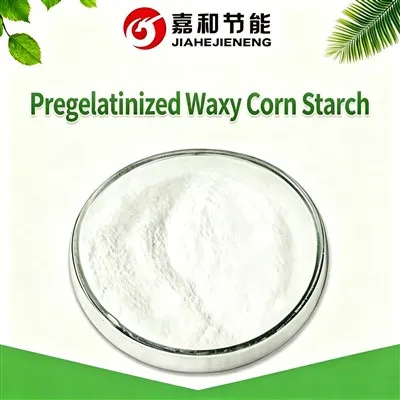
As a seasoned supplier of pregelatinized starch, I’ve witnessed firsthand the remarkable versatility and functionality of this product. Modified pregelatinized starch, in particular, takes these qualities to a whole new level. In this blog post, I’ll delve into the science behind modified pregelatinized starch and explore how it enhances its functionality across various industries. Pregelatinized Starch
Understanding Pregelatinized Starch
Before we dive into the modifications, let’s briefly understand what pregelatinized starch is. Starch is a complex carbohydrate found in plants, typically in the form of granules. Pregelatinized starch is produced by cooking native starch and then drying it to form a powder. This process disrupts the starch granules, making the starch more soluble and easier to use in cold water or without further cooking.
Pregelatinized starch is widely used in the food industry as a thickening, stabilizing, and binding agent. It can also be found in non – food applications such as in the paper, textile, and pharmaceutical industries. However, the native pregelatinized starch may not always meet the specific requirements of different applications, which is where modification comes in.
Types of Modifications
Chemical Modification
Chemical modification involves reacting the starch molecules with various chemicals to change their structure and properties. One common type of chemical modification is cross – linking. Cross – linking agents such as sodium trimetaphosphate or adipic acid are used to form covalent bonds between the starch molecules. This results in a more rigid and stable starch structure.
Cross – linked modified pregelatinized starch has better resistance to shear, heat, and acid conditions. In food products like soups and sauces, it can maintain its thickening power even when exposed to high – speed stirring during processing or to acidic ingredients. In the paper industry, cross – linked pregelatinized starch can improve the strength and printability of paper by providing better fiber – to – fiber bonding.
Another type of chemical modification is substitution. By introducing functional groups such as hydroxypropyl or acetyl groups to the starch molecules, the starch becomes more hydrophilic. Hydroxypropyl – modified pregelatinized starch has improved solubility and freeze – thaw stability. This makes it an ideal ingredient in frozen foods, as it can prevent the formation of ice crystals and maintain the texture of the product during freezing and thawing cycles.
Physical Modification
Physical modification methods involve changing the physical state of the starch without altering its chemical composition. One popular physical modification technique is extrusion. During the extrusion process, the starch is subjected to high temperature, pressure, and shear forces. This causes the starch granules to break down and form a new structure with improved functionality.
Extruded modified pregelatinized starch has a more open structure, which allows it to absorb water more quickly and swell more effectively. In the bakery industry, this type of starch can be used to improve the moisture retention and shelf – life of bread and cakes. It also enhances the texture of the products, making them softer and more elastic.
Another physical modification method is micronization. Micronized modified pregelatinized starch has a smaller particle size compared to regular pregelatinized starch. This results in a faster hydration rate and better dispersibility in water. In the beverage industry, micronized pregelatinized starch can be used as a clouding agent or a stabilizer to improve the appearance and stability of drinks.
Enhancing Functionality in Different Industries
Food Industry
In the food industry, modified pregelatinized starch plays a crucial role in enhancing the quality and stability of products. In dairy products such as yogurt and ice cream, modified starch can act as a thickening and stabilizing agent. It prevents the separation of water and milk solids, giving the products a smooth and creamy texture.
In meat products, modified pregelatinized starch can be used as a binder. It helps to hold the meat together, reduce cooking loss, and improve the juiciness of the final product. For example, cross – linked modified starch can withstand the high temperatures during cooking and maintain its binding properties.
In the confectionery industry, modified starch is used in products like jelly beans and gummies. It provides the necessary gelling and setting properties, giving the candies their characteristic shape and texture. Hydroxypropyl – modified starch is often preferred in this application due to its good solubility and transparency.
Pharmaceutical Industry
In the pharmaceutical industry, modified pregelatinized starch is used as an excipient. It can act as a filler, binder, or disintegrant in tablets and capsules. Cross – linked and modified pregelatinized starch can improve the mechanical strength of tablets, allowing them to withstand the handling and packaging processes. At the same time, it can also ensure the rapid disintegration of tablets in the digestive tract, facilitating the release of the active ingredients.
The improved solubility and dispersibility of modified pregelatinized starch are also beneficial in liquid pharmaceutical formulations. It can help to suspend insoluble drug particles, improving the stability and homogeneity of the suspensions.
Paper Industry
In the paper industry, modified pregelatinized starch is used for surface sizing and coating applications. Cross – linked and modified starch can enhance the surface strength of paper, reducing the dusting and fluffing during printing and converting processes. It also improves the ink – holding capacity of the paper, resulting in sharper and more vivid prints.
The physical properties of modified pregelatinized starch, such as its ability to form a smooth film, are also important for paper coating. A well – coated paper has improved gloss, smoothness, and water resistance, making it suitable for high – quality printing applications.
Textile Industry
In the textile industry, modified pregelatinized starch is used as a sizing agent. It is applied to the yarn to improve its strength, abrasion resistance, and weaving performance. The cross – linked and modified starch forms a thin film around the yarn fibers, protecting them from damage during the weaving process.
The hydrophilic nature of some modified starches also allows for better dye – uptake in the subsequent dyeing process. This results in more uniform and vibrant colors on the textile products.
The Business Advantage of Modified Pregelatinized Starch
As a supplier, I understand that the functionality of modified pregelatinized starch translates into significant business advantages for our customers. By using our high – quality modified pregelatinized starch, food manufacturers can produce products with better sensory properties, longer shelf – lives, and lower production costs. Pharmaceutical companies can improve the quality and effectiveness of their drugs, while paper and textile manufacturers can enhance the performance of their products and gain a competitive edge in the market.
Moreover, our team of experts is always ready to provide technical support and customized solutions. We can work closely with our customers to develop modified pregelatinized starch products that meet their specific requirements, whether it’s for a new food product formulation or an innovative paper – making process.
Starch Binder for Fertilizer Granulation If you’re interested in exploring the potential of our modified pregelatinized starch products for your business, I encourage you to reach out. Our sales team is eager to engage in detailed discussions with you, understand your needs, and find the most suitable solutions. Together, we can enhance the functionality of your products and drive your business forward.
References
- BeMiller, J. N., & Whistler, R. L. (Eds.). (2009). Starch: Chemistry and Technology. Academic Press.
- Swinkels, J. M. (1985). Starch production: Technology and quality aspects. In Starch: Properties and Potential (pp. 1 – 30). Wiley.
- O’Brien, T. P. (2005). Modified Starches: Properties and Uses. CRC Press.
Ningjin Jiahe Energy Saving Materials Co., Ltd.
As one of the most professional pregelatinized starch manufacturers and suppliers in China, our products have good reputation in the market. Please feel free to wholesale high quality pregelatinized starch made in China here from our factory. We also accept customized orders.
Address: West 100 meters south of the intersection of Hongtu Road and Sanling Street, Ningjin Economic Development Zone, Dezhou City, Shandong Province(Place of Business: East Side, North End of Industrial 3rd Road, Eastern New Area, Ningjin County, Dezhou City, Shandong Province)
E-mail: jhyangxinyu@gmail.com
WebSite: https://www.jiahestarch.com/
