If you’ve ever watched a small-scale gold prospector work a shallow creek, you’ve probably seen them set up a sluice box: that long, sloped trough lined with riffles, miners moss, and sometimes carpet designed to catch heavy gold particles as river water flows through it. It’s a tool so tied to small, backcountry operations that when I tell people I supply sluice boxes for large river projects, I usually get a confused look. “Sluice boxes? In a big river? That’s just for creeks, right?” That’s the question I get most often these days, and after 12 years in the sluice box supply business—working with prospectors, mining teams, and even environmental restoration groups across North America—I can say with confidence that yes, a well-engineered sluice box absolutely can work in a large river. It’s not just possible; it’s become a game-changer for a lot of operations that were once stuck using far less efficient, far more expensive equipment. Sluice Box
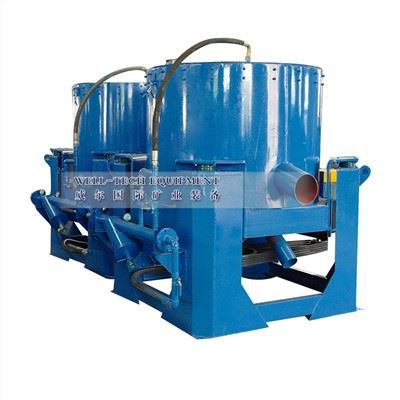
Let’s start with what most people get wrong about sluice boxes: they aren’t one-size-fits-all. The tiny, portable sluice boxes you see backyard prospectors hauling to their local creek? Those are designed for water flows of 10 to 50 gallons per minute, max. They work great for 2-foot-deep creeks with gentle bends, but drop them into a 500-foot-wide large river with 10-foot-deep pools and current moving at 3 miles per hour, and they’ll either get swept downstream in 10 seconds or do almost nothing to catch gold. But the sluice boxes we build for large rivers are a different breed—we call them high-flow sluices, and they’re engineered to handle the unique challenges of big water, not just small creeks.
First, let’s talk about the main obstacle with large rivers: sheer volume and force. A small creek might move a few thousand gallons of water an hour, but a large river? We’re talking millions. When you scale up a sluice box, you can’t just make it longer or wider and call it a day. We’ve learned that the key is matching the riffle design to the river’s specific flow characteristics, not just generic specs. For example, on the Mississippi River’s upper reaches, where the current stays consistent but has occasional eddies that shift around sandbars, we line our sluices with modular riffle systems—removable sections that let teams adjust the spacing or height depending on where they’re working that day. On the St. Lawrence, where the water is deeper and faster in the main channel, we add weighted anchors and side skirts to the sluice that press against the riverbed, so it doesn’t float or slide when the current picks up. This isn’t guesswork, either; we work closely with the teams that use our sluices to collect data on flow rates, sediment load, and gold particle size before a project even starts.
Another common misconception is that sluice boxes can only catch large gold nuggets. That’s true for small, low-flow models, but large river sluices are designed to catch fine gold too—the kind that’s just a few millimeters across and easily gets washed away. I remember a project we did a few years back with a team working the Columbia River near Portland. They were using a old, small sluice that only caught about 20% of the fine gold that passed through, so they were losing thousands of dollars worth of material every month. They switched to our high-flow fine-gold sluice, which has a combination of woven miners moss and a thin, grizzly-like mat that traps even the smallest particles. Within the first week, their gold recovery rate jumped to over 80%. The team lead, a guy named Jake who’s been mining the Columbia for 35 years, told me, “I’ve tried every piece of equipment out there, and this sluice is the first that actually works in the big river without me having to babysit it.”
Of course, there are still challenges. You can’t just drop a sluice box into the middle of a large river and leave it running for weeks without maintenance. Sediment buildup is the big one. Large rivers carry way more sand, silt, and mud than small creeks, and if that buildup gets trapped in the sluice’s riffles, it clogs them up and stops gold from being caught. That’s why our large-river sluices have a self-cleaning design—sloped riffles that let lighter sediment wash through while heavier gold stays behind, and quick-release latches so teams can empty the sluice without having to disassemble the whole thing or haul it to shore. We also work with teams to schedule regular maintenance runs, usually at low tide or during seasonal slowdowns, so they can clear out any buildup and check for wear and tear.
It’s not just recreational or small-scale commercial mining that’s using these sluices, either. In the last five years, we’ve started supplying them to environmental restoration projects too. Large rivers are often dredged to remove sediment that clogs waterways or damages fish habitats, but traditional dredging equipment can stir up too much sediment and harm aquatic life. Sluice boxes, on the other hand, are gentler. The slow, controlled flow through the sluice lets sediment settle naturally, and teams can use the same setup to separate any heavy metals or contaminants from the riverbed material before it’s pumped back into the water. A project on the Willamette River a few years back used our sluice boxes to remove old lead and mercury from industrial runoff, and they reported no significant disruption to the local salmon population—something traditional dredging couldn’t do.
I should be clear: this isn’t a replacement for all large river mining equipment. If you’re working a major river with huge gold deposits spread over hundreds of square miles, there are larger, more heavy-duty systems designed for that. But for many prospectors and small commercial teams, a well-built sluice box is a far more affordable, portable, and effective option than the alternatives. A full-size dredge for large rivers can cost $50,000 or more, plus the fuel and maintenance to run it. A high-flow sluice box we supply starts at around $1,500, and it can be transported in a standard pickup truck, set up in a few hours, and operated by a crew of two instead of five. That’s a huge difference for teams working on tight budgets.
I’ve heard a lot of people say that sluice boxes are a “primitive” tool, but that couldn’t be further from the truth. The large-river models we build now use the same basic science as the original sluices from the Gold Rush—gravity separation, letting water carry light material away while heavy gold sinks—but we’ve updated them with modern materials like UV-resistant plastic and stainless steel riffles, and we use data from USGS river flow studies to design them for specific water conditions. Just last year, we did a project on the Yukon River, where the water temperature drops below freezing in the winter, and the sluices worked flawlessly even when parts of the river started to ice over. The team there had tried a custom-built sluice that cracked after two weeks, but our model was designed for extreme cold, so it held up all season.
That’s not to say there aren’t mistakes people make. I’ve seen teams try to use a small creek sluice in a large river and end up losing it to the current, or line their sluice with the wrong material and lose 90% of their gold. The key is partnering with a supplier who knows large river conditions, not just small creek prospecting. We don’t just sell sluice boxes—we work with teams to test their specific river, adjust the design, and provide training on how to set it up and maintain it. When Jake, that Columbia River prospector, first used our sluice, he called me panicking because the side skirts weren’t fitting right. We walked him through adjusting the anchors over a 20-minute call, and he was back to working within an hour. That’s the kind of support you don’t get from a generic online retailer selling portable creek sluices.
So can a sluice box be used in a large river? Absolutely. It’s not the right tool for every job, but for a huge range of projects—from small commercial mining to environmental restoration—it’s proven to be effective, affordable, and flexible. The technology has come a long way since the Gold Rush, and what started as a small creek tool has become a valuable asset for anyone working in the big, powerful water of major rivers.

If you’re considering a sluice box for your large river project, we can help you design a system tailored to your specific river, flow conditions, and goals. Whether you’re prospecting for gold, removing contaminants, or restoring river habitats, our team has the experience and equipment to get the job done right. Reach out to our sales team to discuss your needs and get a custom quote.
Magnetic Separator References:
- USGS. (2022). River Flow Characteristics and Sediment Loads for North American Major River Systems. U.S. Geological Survey Water Resources Research Program.
- Mining Engineering Magazine. (2021). "Gravity Separation Technologies for Fine Gold Recovery in Large River Environments." Vol. 73, No. 4, pp. 45-52.
- Environmental Protection Agency. (2020). Low-Impact Dredging Methods for Aquatic Habitat Restoration. EPA Region 10 Water Protection Division.
- Gold Prospectors Association of America. (2023). Sluice Box Design and Application for Large-Scale River Operations. GPAA Technical Manual Series.
- International River Foundation. (2022). Small-Scale Mining Tools and Their Impact on River Ecosystems. IRF Sustainable Mining Report.
Jiangxi Well-tech International Mining Equipment Co., Ltd.
Jiangxi Well-tech International Mining Equipment Co., Ltd. is one of the most professional sluice box manufacturers and suppliers in China, featured by quality products and good service. Please rest assured to wholesale customized sluice box at competitive price from our factory.
Address: Guzhang Industrial Park of Shicheng County, Ganzhou City, Jiangxi Province, China
E-mail: mily@benefication.com
WebSite: https://www.cn-welltech.com/
