If you’ve ever spent time in industrial machinery, automotive manufacturing, or agricultural equipment repair, chances are you’ve heard the term “bimetal bushings” tossed around—even if you didn’t know exactly what made them different from the plain bronze or steel bearings your grandfather might have worked with. As a bimetal bushings supplier who’s been in this game for over 18 years, I’ve fielded dozens of questions from engineers, maintenance techs, and plant managers asking why this part matters, when to use it, and what makes it worth the extra investment vs. a standard monometal part. Today, I’m breaking down exactly what bimetal bushings are, how they work, and why they’re the unsung heroes of so many operations you rely on every day. Bimetal Bushings
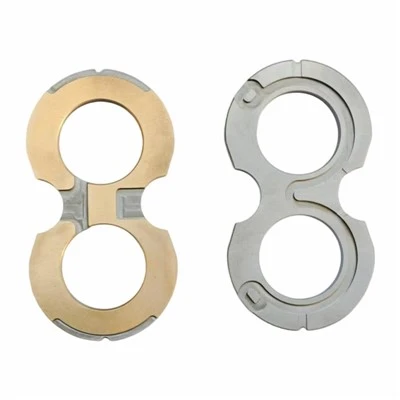
First, let’s cut through the jargon. A bimetal bushing is a plain bearing (that’s the part that reduces friction between two moving, rubbing metal components) made by bonding two distinct metal layers together, permanently and metallurgically, not just pressed or glued. The two layers have completely separate jobs, which is the whole point of the design. The back layer—usually steel, sometimes stainless steel or cast iron—is the structural workhorse. It’s strong, rigid, and handles the heavy loads, impacts, and structural stress that the bushing will face when it’s installed in a frame, axle, or machine housing. The inner layer, the one that actually touches the rotating or sliding shaft, is a softer, more wear-resistant metal—most often tin bronze, lead bronze, aluminum bronze, sometimes even a porous sintered metal infused with lubricant for long-term operation. That split design solves a problem that’s plagued single-layer bearings for generations: you can’t have one metal that’s both ultra-strong enough to hold up under massive loads and low-friction enough to spin smoothly against a shaft without wearing out. A monometal steel bushing, for example, is strong but rusts easily, seizes if it runs dry of lubricant, and wears grooves into your expensive shaft over time. A pure bronze bushing has great friction and wear properties, but it’s soft, can deform under heavy impact, and costs way more to produce in thick, structural layers. Bimetal bushings merge the best of both worlds.
I remember the first time I saw a bimetal bushing up close, back when I was an apprentice machinist in a small repair shop in rural Ohio. A farmer had brought in a broken combine header pivot, and the old part he’d ordered as a replacement was a cheap single-layer bronze bushing that had sheared in half after two harvests. The mechanic I worked with pulled out a bimetal bushing catalog, pointed to a part number, and said, “This one won’t give him trouble again.” I was skeptical at first—how could two thin layers of metal hold up to thousands of pounds of force from header weights and rough field terrain? But years later, that same farmer came back, 10 years later, with a different combine, and mentioned he’d put that first bimetal bushing in the original one and it was still working. That’s when I realized this isn’t just a niche industrial part—it’s a solution that gets noticed when it works, because it doesn’t break.
Now, let’s get into the science of how those two layers bond, because that’s what makes a bimetal bushing reliable enough for heavy use. It’s not just pressing two flat sheets together and rolling them into a tube. The most common manufacturing method for high-quality bimetal bushings is a sinter-bonding process: first, the steel back is precision-cleaned to remove all oil, rust, and scale, then coated with a thin layer of bronze to create a molecular bond interface. Next, the bronze layer is applied—either as a pre-sintered powder that’s compressed onto the steel, or as a cast bronze strip that’s roll-bonded under extreme pressure at high temperatures, so the metal atoms of the steel and bronze fuse together at the interface, not just sit next to each other. This is critical. If the bond is weak (like you get from cheap imported parts that use a thin adhesive or just a light press fit), the two layers can separate under load: the bronze inner layer will spin inside the steel back, leading to instant bearing failure. At our facility, every batch of bushings we produce goes through a peel test early in the process—we yank at the edge of the bronze layer to make sure it doesn’t delaminate, because we’ve seen too many customers burn themselves on that cheap off-the-shelf stuff.
So where do bimetal bushings actually get used? Let’s break down the most common applications, because that’s where you’ll see their value most clearly. First, automotive and heavy truck chassis components: leaf spring eyes, steering linkages, stabilizer bar pivots, and trailer axles. These parts are exposed to constant vibration, heavy cyclic loads, and extreme temperatures—from -40°F in the northern states in winter to 120°F under the hood in summer. A bimetal bushing’s steel back handles the flex from the suspension, while the bronze inner layer slides smoothly against the pivot pin, no squeaking, no seizing, no needing to regrease every oil change. Next, agricultural equipment: combine headers, tractor drawbars, baler twine rollers, and irrigation system pivots. Farm machinery runs 12 to 16 hours a day during harvest season, often in dusty, dirty conditions that can get into bearings and accelerate wear. The bronze inner layer is compatible with marginal lubrication—meaning if it’s a dry-lube sintered bronze, it has tiny pores packed with lubricant that last for thousands of hours, so a farmer doesn’t have to grease bearings every week, which saves time out in the field. Industrial equipment is another big one: conveyor systems, pump impeller shafts, construction equipment (excavator boom pivots, loader bucket pins), and gearbox idlers. In these settings, loads can hit suddenly—like an excavator bucket dropping a 10,000-pound rock—and a bimetal bushing’s steel back can absorb that impact without deforming, while the bronze layer’s wear resistance means it won’t groove the shaft, which saves customers from having to replace a costly $500 shaft instead of a $20 bushing.
One of the most common questions I get is: “When should I use a bimetal bushing, and when can I get away with a cheaper part?” That’s a fair question, because price is always a factor. Let’s be honest: a standard molded rubber bushing or a single-layer bronze bushing might cost half as much as a bimetal part, so if your application is low-load, low-cycle, and fully enclosed in a clean, lubricated environment, that’s probably fine. For example, a small door hinge on an indoor cabinet? A plain steel pin works. A residential garage door pivot? Fine with molded plastic. But if you’re dealing with cyclic loads over 100 psi, exposure to dust, dirt, or temperature extremes, or operating in a maintenance-light environment (like off-road equipment or remote farm irrigation), bimetal bushings are almost always the better long-term investment. I had a customer last year who runs a fleet of 20 delivery trucks. He was replacing suspension pivot bushings every 6 months at a cost of $1,200 per truck, because the cheap bronze bushings were wearing out from constant stop-and-go city traffic. We switched him to our standard tin bronze bimetal bushings, and he just placed a reorder 18 months later—he said he hasn’t replaced a single one since, and the only maintenance he does on those pivots is a quick spray of lubricant once a year. That’s the ROI right there: paying a little more upfront to eliminate 3 years of replacement and downtime.
Another point that people don’t talk about enough is corrosion resistance, or lack thereof. The steel back of a standard bimetal bushing is not stainless steel, so if it’s exposed to standing water or salt, it will rust— which is why most of our bimetal bushings are zinc-plated or black-oxide coated on the outer steel back, and sometimes we offer full stainless steel back bimetal parts for marine or coastal applications, where salt spray is a constant issue. The inner bronze layer, though, is highly corrosion-resistant, which is why even in applications with occasional moisture, the sliding surface stays functional long after a single-layer steel bushing would have rusted solid. We also offer custom variations for specific needs: aluminum bronze inner layers for high-temperature applications (up to 600°F, compared to tin bronze’s 250°F limit), leaded bronze for extra-low friction in high-speed shafts, and even polymer-infused bronze layers for completely dry operation, no lubrication at all, for food processing equipment where grease contamination is a risk.
I want to be transparent here about what bimetal bushings aren’t. They aren’t a magic fix for every bearing problem. They can’t handle extreme high-speed operation over 10,000 rpm as well as a ball bearing, for example, and they aren’t ideal for very low-load applications where weight is a critical factor (like small robotics parts, where a plastic bushing works fine). They are, however, the sweet spot for moderate to heavy loads, medium speeds, harsh environments, and applications where reliability and low maintenance are non-negotiable.
Over the years, I’ve seen a lot of misinformation online about bimetal bushings, mostly from suppliers cutting corners on manufacturing. The biggest myth is that all bimetal bushings are the same. I’ve received test batches from overseas suppliers that had bronze layers that peeled off after 10 hours of operation under load, or steel backs that were so thin they bent when we tried to press them into a housing. That’s why, if you’re sourcing bimetal bushings, it’s important to work with a supplier that controls the entire manufacturing process, from raw material selection to final inspection. At our facility, we source our steel from domestic steel mills with certified tensile strength, our bronze powder is formulated in-house to meet specific wear and friction standards, and every bushing is inspected for dimensional accuracy, bond strength, and surface finish before it leaves our dock. We offer custom sizes, too— not just off-the-shelf standard parts, but bushings cut to your exact inner diameter, outer diameter, length, with custom chamfers or flange designs to fit your specific housing, no minimum order for small prototype runs.
If you’re reading this and you’re wondering if bimetal bushings can solve a problem you’re having, whether that’s frequent bearing replacement, downtime from seized parts, or premature wear on your shafts, I’d encourage you to reach out. I’ve worked with everyone from small farm operations to large construction companies and automotive OEMs, and I can help you pick the right bimetal bushing for your application, walk you through the pros and cons, and even provide sample parts for testing. We also offer technical support for engineers designing new equipment, so you can integrate bimetal bushings into your designs with confidence, no guesswork.
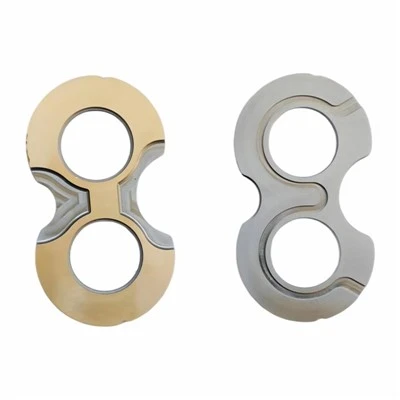
At the end of the day, industrial machinery is only as reliable as its smallest, most overlooked parts. A bimetal bushing doesn’t get the fanfare of a new engine or a high-tech sensor, but it’s the part that keeps your combine running through harvest, your delivery trucks on the road, and your conveyor lines moving parts to build the products people rely on. For almost two decades, our team has been focused on making bimetal bushings that do that job right, no cutting corners, no shortcuts, so our customers can focus on what they do best, not replacing broken bearings. If you’re ready to stop dealing with frequent bearing failures and start investing in a part that lasts, don’t hesitate to get in touch to discuss your needs.
Bimetal Strips & Sheets References
- Design of Machine Elements, Spotts, M.F., Shoup, T.E., and Hornberger, L.E., 7th Edition, Prentice Hall, 2004.
- Plain Bearings: Design and Application, British Standards Institution, BS ISO 3545:2019, 2019.
- Tribology for Engineers, Hutchings, I.M., and Shipway, P.H., 3rd Edition, Butterworth-Heinemann, 2017.
- “Bimetallic Bearings: Fundamentals and Manufacturing Processes”, Journal of Industrial Tribology, Vol. 68, No. 4, 2016.
- Agricultural Machinery Design Handbook, American Society of Agricultural and Biological Engineers (ASABE), 2020.
Qingzhou Baiyun Anti-friction Products Co., Ltd.
With abundant experience, we are one of the most professional bimetal bushings manufacturers and suppliers in China. Please rest assured to wholesale customized bimetal bushings at competitive price from our factory. Welcome to contact us for quotation.
Address: Linglongshan North Road (south of the railway bridge), Economic Development Zone, Qingzhou City, Weifang City, Shandong Province
E-mail: byantifriction@gmail.com
WebSite: https://www.baiyunbimetal.com/
