Hey guys, let’s cut to the chase: if you’ve ever stared at a fancy watch and wondered how it gets made—especially those tiny, super detailed parts that make high-end pieces feel like works of art—you’re not alone. As a metal 3D printing supplier, I’ve been knee-deep in this space for years, and let me tell you: the watch manufacturing industry hasn’t just evolved lately—it’s been flipped on its head by metal additive manufacturing. No more clunky, wasteful traditional processes, no more waiting months for prototypes, no more settling for designs that don’t feel exactly right. Today, I’m gonna break down how this tech is changing every step of watch making, from initial ideas to the final tick, and why it’s a game-changer that every watchmaker should be paying attention to. Metal 3D Printing
First, let’s get one thing straight: I’m not here to pitch jargon. If you’ve ever heard “metal 3D printing” and zoned out because it sounds like something from a sci-fi movie, relax—this is real, and it’s already being used to make some of the most iconic watches you’ve ever seen. Traditional watch manufacturing has relied on subtractive methods for decades, right? That means you start with a big block of metal—stainless steel, titanium, gold, whatever—and you carve away everything you don’t want. Think of it like sculpting a statue out of a marble block by chipping off stone until you get the shape. The problem? You waste so much metal—like, up to 90% of the original block just gets tossed as scrap. For a small business or a startup watchmaker, that’s a huge hit to the budget. Gold? Even worse—you’re throwing thousands of dollars down the drain for shavings no one will ever use. And let’s not forget lead times: a single prototype part can take 4-6 weeks to mill, especially if it’s tiny and precise. By the time you get that prototype, your design team’s already moved on to 10 other ideas, and you’re falling behind on launching your collection.
That’s where metal 3D printing steps in. It’s additive manufacturing, which means you build parts layer by layer, fusing metal powder together with lasers or electron beams—no block, no scrap, no waiting. For watch parts, that’s a total paradigm shift. Let’s start with prototypes, because that’s where most small makers get stuck. A few years back, if you wanted to test a new watch case design, a custom gear, or even a tiny crown, you’d have to send a CAD file off to a machine shop, wait weeks, and hope the part came back perfect. If it was off by a fraction of a millimeter (which it always is, honestly), you’d have to do the whole thing over again. With metal 3D printing, though? You upload your design to a printer at our facility, and in 2-3 days, you’ve got a real, functional part in your hand. I’ve seen guys go from “we have a rough sketch” to “let’s test this” in a single week—something that would’ve taken a month pre-additive. And the best part? No scrap. If your prototype fails, you can reuse the leftover powder to print a new one. That’s a massive cost saver, especially for niche watchmakers who don’t have deep pockets for R&D.
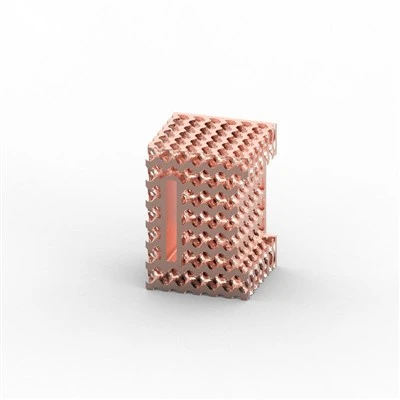
But it’s not just prototypes—metal 3D printing is rewriting the rulebook for final production parts too. Let’s talk about design freedom, because that’s the big one traditional machining can’t touch. Watches are all about the small details: the way the case curves to fit your wrist, the intricate patterns on the dial, the tiny gears that fit together like a puzzle. With subtractive manufacturing, those details are hard to pull off. If you want a gear with a unique, non-symmetrical tooth profile, for example, milling it would require custom tooling—another week or two, more money, and a higher chance of error. With metal 3D printing, you can design that gear to be exactly how you want it, no custom tools needed. And it’s not just small parts—we’ve worked with a watchmaker who printed an entire skeletonized watch case (that’s the open, see-through kind where you can view the movement inside) that was lighter, stronger, and more intricate than anything they could mill. The skeletonization didn’t require cutting extra material away; we designed the lattice structure to be where it needed to be, so the case was only as heavy as it had to be for durability. That’s not possible with traditional methods, because milling a lattice inside a tight watch case would be impossible without carving through the outer layer.
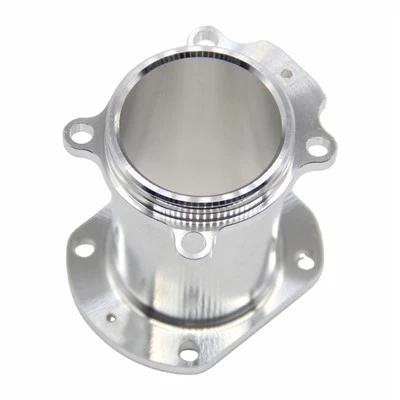
Durability is another thing people sleep on. A lot of folks think 3D printed metal parts are weaker than machined ones, but that’s a myth—especially when we use the right metals and post-processing. In fact, some 3D printed parts have tighter tolerances and higher strength-to-weight ratios than machined parts, because the layer-by-layer fusing creates a uniform, dense structure. We’ve supplied parts for dive watches that go 300 meters under water, and they hold up just as well as any machined part—because we use materials like 316L stainless steel or titanium, which are super corrosion-resistant. We also offer post-printing services, like CNC machining to fine-tune tolerances, heat treatment to boost strength, and polishing to get that shiny, high-end finish watchmakers want. So you don’t have to trade quality for speed or design—you get both.
Wait, let’s talk about custom watches too, because that’s a huge market no one’s talking about enough. A decade ago, if you wanted a custom watch that was sized exactly for your wrist, with a unique engraving, or a movement tailored to your preferences, you were looking at a $10,000+ price tag and a 6-month wait. Metal 3D printing changes that. Now, a small maker can offer custom watches at a fraction of the cost, because you don’t have to produce 100 identical parts to make it worth the machine shop’s time. For example, if a customer wants a watch case with a specific curve to fit their 7.5-inch wrist, you just upload the customized CAD file to the 3D printer, and it prints exactly that one part, no extra setup time, no minimum order quantity. We’ve had clients print 10 custom parts for a small batch run, something that would’ve cost them thousands more with traditional methods. That’s opened up a whole new world for independent watchmakers who want to stand out from the big brands that churn out identical watches by the thousands.
Now, I know what some of you are thinking: “What about quality control? 3D printed parts—are they consistent enough for a watch that needs to keep time to the second?” That’s a fair question, and it’s why we’ve invested so much in our printing tech and quality processes. Each of our metal 3D printers is calibrated to get tolerances within 0.05 millimeters, which is way more precise than most watch parts need. We do in-process checks too—monitoring every layer of the print to make sure there are no gaps, no powder clumps, nothing that would mess up the part. And for post-processing, we have full machining and inspection labs, so every part that leaves our facility goes through a thorough check to make sure it meets watch industry standards. We’ve had clients come to us after getting 3D printed parts from other suppliers that had gaps or uneven layers, but that’s not the case with our setup—we’ve worked with watch brands that now use our parts for 90% of their production, because the consistency is spot-on.
Let’s also talk about sustainability, because that’s a big deal these days, even in watch making. Traditional subtractive machining creates tons of metal scrap—most of it’s recyclable, but it’s still waste that takes energy to process and transport. With metal 3D printing, we only use the exact amount of metal powder needed for the part. Leftover powder? We filter it, test it for purity, and reuse it for future prints. Last year, one of our watch clients cut their metal waste by 82% when they switched from milling to 3D printing with us. That’s not just good for the planet—it’s good for their bottom line, because they’re not paying for metal they’re just going to throw away. For a watch brand, that adds up to thousands of dollars saved every quarter, which they can put back into R&D or marketing instead of scrap.
Now, I don’t want to make it sound like metal 3D printing solves every problem in watch making. It’s a tool, right? It works best when you know how to use it, and you pair it with the right post-processing. For example, if you’re printing a watch movement’s gears, you still need to make sure the tolerances are just right, and you might need a quick CNC pass after printing to get the edge smooth for low friction. That’s why we don’t just print parts and send them off—we work closely with our watch clients, help them tweak their designs to be 3D-printable, and offer advice on post-processing so their final product is exactly what they want. We’re not just a supplier; we’re a partner for independent watchmakers and small brands that want to compete with the big guys.
Let me give you a real example. Last year, we worked with a small watchmaker in Portland who wanted to launch a limited-edition series of skeletonized dive watches. They’d tried milling the cases themselves, and they were only getting a 50% success rate—each case took 8 hours to mill, they had 100% scrap for every prototype, and they couldn’t get the lattice structure inside the case right because the mill couldn’t reach. They came to us, we took their CAD file, tweaked the design to be optimized for our metal 3D printer, and in 3 days, they had 5 functional prototype cases. We post-processed them, polished them, and sent them back. They tested them, made a few tiny design changes, and then we printed 50 production cases for their launch. The whole process—from first prototype to production—took 4 weeks. Pre-3D printing, they’d have been looking at 3 months for prototypes and another 2 months for production, at a cost that was 3x higher. They sold out their limited run in 10 days, and now they’re working on a next-gen model with even more complex parts. That’s the power of this tech in action.
So what does this mean for the future of watch manufacturing? The big brands are already catching on—Rolex has been experimenting with metal 3D printed parts for some time, Omega’s used it for custom components too—but the real shift is for independent watchmakers and small brands. They no longer have to be locked out of the market because they can’t afford custom tooling or long lead times. They can iterate fast, test new designs, offer custom products, and create parts that were impossible just 10 years ago. Metal 3D printing isn’t a fad—it’s here to stay, and it’s going to keep pushing the boundaries of what watches can be.
If you’re a watchmaker, an independent brand, or someone who’s been toying with the idea of launching your own line, let’s talk. We can help you prototype parts, figure out what’s 3D-printable, and scale up production without breaking the bank. No long-term contracts, no hidden fees—just real metal 3D printing solutions tailored to your needs. The next big watch design could be 3 days away, not 6 weeks. Don’t let traditional processes hold you back.
Wait, quick note for anyone reading this: I know a lot of you are still skeptical about additive manufacturing for high-end watches, and that’s totally fair. But we’ve tested these parts against every standard in the industry—corrosion resistance, pressure testing, shock resistance—and they pass with flying colors. We’re not talking about cheap plastic 3D prints; this is metal, fused at high temperatures, finished to the same standards as any machined watch part.
At the end of the day, watch making is about precision, creativity, and quality. Metal 3D printing doesn’t take any of that away—it enhances it. It lets you be more creative, test more ideas, get your products to market faster, and save money while you do it. If you’re ready to stop fighting the limitations of old manufacturing and start making the watch you actually want, reach out and let’s chat.
CNC Milling Services References:
- International Organization for Standardization (ISO). Additive Manufacturing for Medical and Watch Industry Applications. ISO 17296-3:2021.
- Gibson, I., Rosen, D.W., Stucker, B. Additive Manufacturing Technologies: 3D Printing, Rapid Prototyping, and Direct Digital Manufacturing. 3rd ed. Springer, 2021.
- Watch Industry News. “Metal Additive Manufacturing Reduces Lead Times for Independent Watchmakers.” 2023.
- ASTM International. Standard Guide for Evaluation of Metal Additive Manufacturing Materials and Parts. ASTM F2924-14, 2020.
- Oberkalker, T. “The Role of 3D Printing in High-End Watch Manufacturing.” Journal of Precision Engineering and Manufacturing, vol. 24, no. 5, 2022, pp. 897-908.
Shenzhen Multi-Wins Precision Technology Co., Ltd.
As one of the most professional metal 3d printing manufacturers and suppliers in China, we have world-leading production equipment and strong manufacturing capabilities. Please feel free to buy customized metal 3d printing made in China here from our factory. Also, quotation is available.
Address: 1 Phase, Yi’an City Central Garden, Longfei Avenue, Longgang District, Shenzhen, GD, China. 518100
E-mail: info@multi-wins.com
WebSite: https://www.multi-wins.com/
