Hey everyone, Sam here—for those who don’t know me, I’ve been running my auxiliary machinery supply business for 8 years, and let me tell you, one question comes up at almost every trade show, client call, or late-night troubleshooting chat: “Why does standardization for aux machinery matter so much?” Back when I started out, I thought it was just stuffy rules from big corporations, paperwork that slowed down projects, and something to avoid whenever possible. Fast forward to now, and I see it every single day: standardization isn’t red tape—it’s the backbone of how my team designs parts, gets orders out on time, and keeps our clients’ operations running without a hitch. Today I want to break down what that standardization actually looks like, from the core bodies setting the rules to how it impacts every part of the equipment we sell, plus how we (as a supplier) use those standards to deliver better gear and service. Auxiliary Machinery
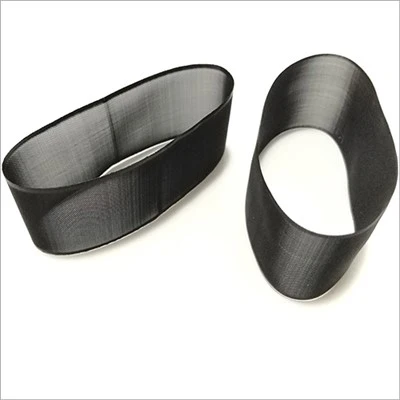
First, let’s get one thing straight: auxiliary machinery isn’t the flashy stuff you see on a superyacht or a cargo ship’s main engine. It’s the unsung heroes: the water pumps that keep engines cool, the air compressors that power tools on a construction site, the hydraulic units that move conveyors in a factory, the generators that keep a data center’s backup systems online when the power flickers. Without these, the whole operation grinds to a halt. That’s why standardization here isn’t arbitrary—it’s built to make sure a pump for a 10,000 TEU container ship fits the same mounting holes as every other pump built to the same rule, or that a compressor we ship to a food processing plant is safe to use with consumable goods, no guesswork.
Now, who actually makes these standards? There are three big global bodies that drive most of the work, plus some regional ones that matter a lot too. Let’s start with the International Organization for Standardization (ISO)—I can’t tell you how often our design team pulls up ISO 10816 for vibration monitoring, or ISO 14801 for hydraulic power units. What’s cool about ISO is that it’s not just for big conglomerates; they have technical committees (TCs) made up of engineers, suppliers, maintenance crews, even small business owners like me, so the rules aren’t just top-down. For aux machinery specifically, ISO TC 10 is the one dealing with pumps, TC 122 for refrigeration and heat pumps, TC 18 for cranes and hoists—each with working groups that meet twice a year to tweak rules based on new tech, like the shift to electric pumps instead of diesel.
Then there’s the International Electrotechnical Commission (IEC). A lot of auxiliary machinery is electrical, right? From variable frequency drives (VFDs) for fans to control panels for water treatment skids. IEC sets the rules for electrical safety, electromagnetic compatibility (EMC)—so a fan in a warehouse doesn’t mess with a nearby barcode scanner. Last year, we had a client who had a custom VFD that kept crashing their inventory system; turns out it wasn’t IEC 61800-3 compliant, so it was leaking electromagnetic noise. We retrofitted it for like a quarter of the cost of a new unit, all because we keep IEC’s specs on hand for every part we sell.
Don’t sleep on the International Maritime Organization (IMO) either—if you’re supplying aux machinery for ships, this is non-negotiable. IMO’s MARPOL Annex VI sets emissions rules for engines, and their Safety of Life at Sea (SOLAS) has super specific requirements for every piece of aux gear on a vessel. A few years back, we were bidding on a project for a fleet of coastal cargo ships; a competitor submitted a pump that was technically “good enough” but didn’t meet SOLAS’s fire safety insulation standards for marine aux equipment. We had built our pumps with those standards from the start, so we got the contract because we didn’t have to redesign anything last minute to pass inspection. That’s the real value here.
But standardization isn’t just about big global rules. There are industry-specific consortia too that fill gaps where ISO/IEC/IMO stop. For example, in the food and beverage processing sector, the 3-A Sanitary Standards are huge. If we supply a pump for a brewery or a dairy, it can’t have crevices where bacteria can hide, and all materials have to be food-grade. 3-A isn’t an ISO standard, but every big food brand will flat out reject gear that doesn’t meet it. We have a dedicated quality check list just for 3-A specs because we’ve learned the hard way—once we sent a small sample pump to a craft brewery that thought ISO was enough, and they sent it right back because it had a rough weld that didn’t pass 3-A’s sanitary surface requirements. That taught us to not rely just on the big global bodies; niche industry standards make or break deals in certain sectors.
Now, what does this actually look like in the design and operation of aux machinery? Let’s break it down with examples from our shop. First, design: almost every pump we make uses standardized mounting flanges per ISO 7005. That means if a client has an old pump that needs replacing, we don’t have to machine a custom base; we just swap out the pump, hook up the pipes, and they’re done in a few hours instead of a few days. That’s a huge win for their downtime, which translates to real money saved. For operation, there’s ISO 12100, the general safety standard for machinery. Every control panel we ship has a emergency stop button placed exactly where ISO says, with a clear label, and all our operators get trained on the same troubleshooting flowcharts based on ISO’s maintenance guidelines. No more guessing “where is the stop button?” or “how do I fix this error code?”—it’s consistent across every machine we sell.
Wait, but what about when clients need custom stuff? I get it, not every job is cookie-cutter. Standardization doesn’t mean you can’t adapt; it means you adapt within a framework that keeps parts compatible. For example, a mining client last year needed a pump that could handle very high-temperature slurry. Instead of building a whole new pump from scratch, we took our standard ISO 10346 pump design, swapped out the metal parts for a high-heat alloy that meets ASTM’s material standards (another key standard body for industrial materials), and kept all the mounting and connection points the same. They got a custom solution, but it was 30% cheaper and built in half the time because we used standardized core parts. That’s the sweet spot—standardization reduces risk and cost, while still letting us meet unique client needs.
Another big part of operation standardization is maintenance. A lot of aux machinery downtime isn’t from the machine breaking—it’s from the tech not knowing how to fix it. The Machinery Lubrication Standard (ISO 1219) is a perfect example. Every gearbox on our aux units uses standardized lubrication fittings, and we post clear ISO 1219-compliant lubrication schedules on every machine. So when a client’s maintenance tech changes jobs, the new guy doesn’t have to learn a whole new system—he just follows the same steps. We even offer free training sessions for our clients on these standards, because we’ve seen time and again that when their team follows the standardized operation rules, their aux units last 20% longer and have 15% fewer breakdowns. That’s not just good for the client—it means less returns and repeat business for us.
Let’s talk about the less obvious side too: sustainability. A lot of the new standardization work right now is focused on energy efficiency, which is huge for clients’ bottom lines and for the planet. ISO 50001 is the energy management standard, and we design all our new variable-speed fans and pumps to meet ISO 50001’s efficiency specs. For example, a warehouse client we work with switched to our standardized energy-efficient aux fans, and they cut their electricity bill for that system by 22% in the first year. IMO’s new EEXI (Energy Efficiency Existing Ship Index) rules are pushing ship owners to upgrade aux machinery, and all our marine pumps are pre-certified to meet EEXI, so we can get those units shipped fast without delays for inspections. That’s standardization driving sustainability, not just rules.
But wait, it’s not all perfect. Standardization has growing pains. Different regions have different rules—like, a pump we build to meet ISO specs for the EU might need extra certification for the US market because of OSHA’s safety rules. Last year, we had to jump through a few hoops to get our new hydraulic units certified for both North America and Southeast Asia, because their electrical standard requirements differ slightly. That’s a headache for small suppliers like me, but it’s worth it because it means our gear works anywhere. Also, sometimes too much standardization can stifle innovation—like, if everyone is using the same pump design, it might take longer to adopt a new tech like AI-powered predictive maintenance. That’s why we make sure our design team is part of those standard-setting meetings, so we can push for standards that leave room for new tech, not lock old ones in.
As an aux machinery supplier, how does all this affect what we do day to day? Let me walk you through a quick order to show you. Last month, a construction company called us needing 12 air compressors for a new road project. They had a standard from their head office: all aux gear has to meet IEC 60335 (electrical safety) and ISO 8573 (compressed air quality for construction). We pulled our standard compressor design—already certified for both standards, so no extra testing. We adjusted the motor size slightly to fit their site’s voltage, but kept the mounting points, air outlet, and control panel the same. We shipped them in 3 days, and their maintenance team could use their existing tools to install and maintain them. They told us later that they saved almost $10,000 because they didn’t have to buy new parts or train their crew on weird, custom gear. That’s the value of standardization in action.
Another example: a data center client reached out because one of our backup generator aux cooling pumps had a minor leak. Our service team showed up, brought the exact seal part (all our pumps use ISO 10438 standard seals), and fixed it in 20 minutes. If the pump was custom, we would have had to machine a new part, wait a week, and the data center would have been at risk. That small seal, part of a standardized design, prevented a huge problem for them and made our service way faster and cheaper.
At the end of the day, standardization for aux machinery isn’t about checking boxes or following rules. It’s about trust. When a client buys our gear, they can be confident that it will fit their existing systems, be safe to use, be easy to maintain, and work efficiently for years. For us as a supplier, it means lower risk, faster turnaround, and the ability to deliver consistent, quality gear without overcharging. Yeah, there are growing pains with different standards, and sometimes the meetings are boring, but the payoff is worth it.

If you’re in the market for auxiliary machinery—whether that’s pumps, compressors, hydraulic units, cooling systems, or anything else for your operation—we’ve got you. We design all our gear to meet the latest global and industry-specific standards, so you don’t have to worry about compliance, custom parts, or unexpected downtime. Whether you need a single replacement pump or a full fleet of aux systems, our team can walk you through the specs, answer any questions about how standards apply to your project, and get you the right gear on time and on budget. Hit us up to connect and discuss your needs.
Carding Machine References
ISO 10816: Mechanical vibration – Evaluation of machine vibration by measurements on non-rotating parts
ISO 50001: Energy management systems – Requirements with guidance for use
International Maritime Organization (IMO) MARPOL Annex VI
3-A Sanitary Standards for Equipment and Materials for Dairy Products
International Electrotechnical Commission (IEC) 61800-3: Adjustable speed electrical power drive systems – Part 3: EMC requirements and specific test methods
OSHA 29 CFR 1910: Occupational Safety and Health Standards for General Industry
ASTM A53: Standard Specification for Pipe, Steel, Black and Hot-Dipped, Zinc-Coated, Welded and Seamless
Shandong Hongye Machinery Co., Ltd.
Shandong Hongye Machinery Co., Ltd. is one of the most professional auxiliary machinery manufacturers and suppliers in China, featured by quality products and low price. Please rest assured to buy advanced auxiliary machinery in stock here and get quotation from our factory. Also, 1 year warranty is available.
Address: Room 1104, Building No. 2, Haier Yunjie, No. 99 Chongqing South Road, Qingdao, China
E-mail: sales@seavincn.com
WebSite: https://www.sdhymachinery.com/
